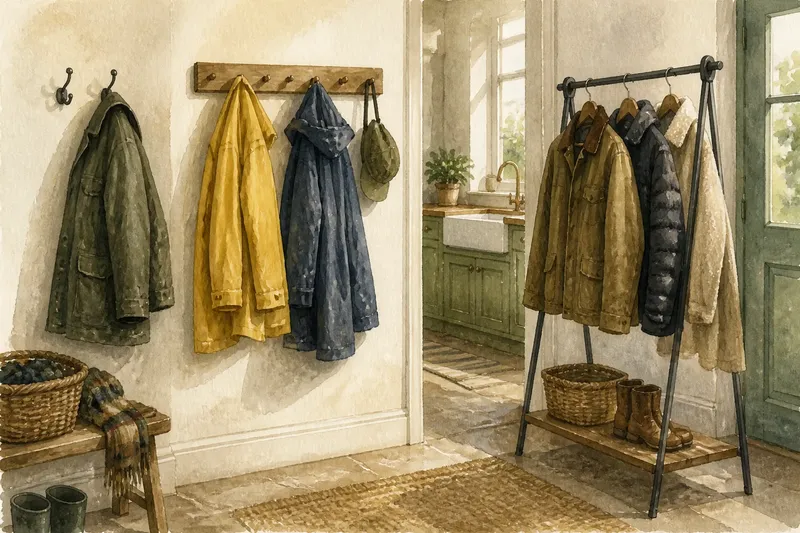
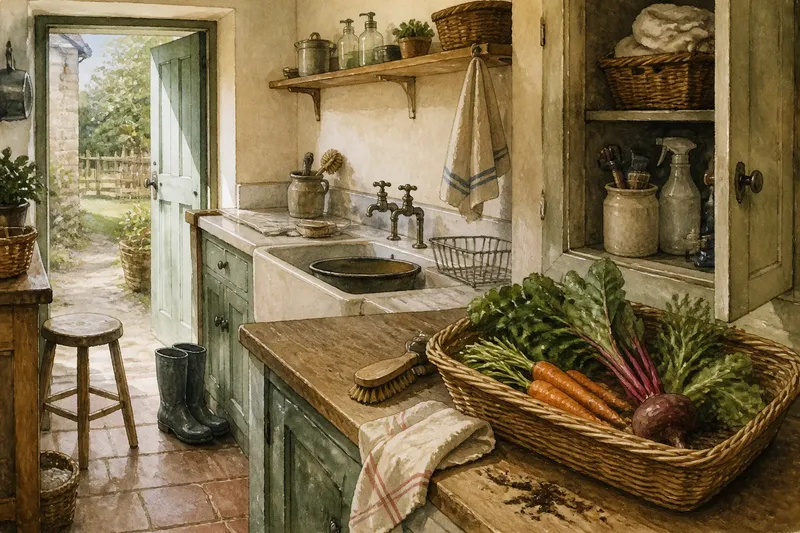
A Mudroom Reset for the First Wet Weeks of Autumn
A mudroom reset for the first wet weeks of autumn makes room for seasonal gear, protects the floor, and keeps the entry usable as routines shift.
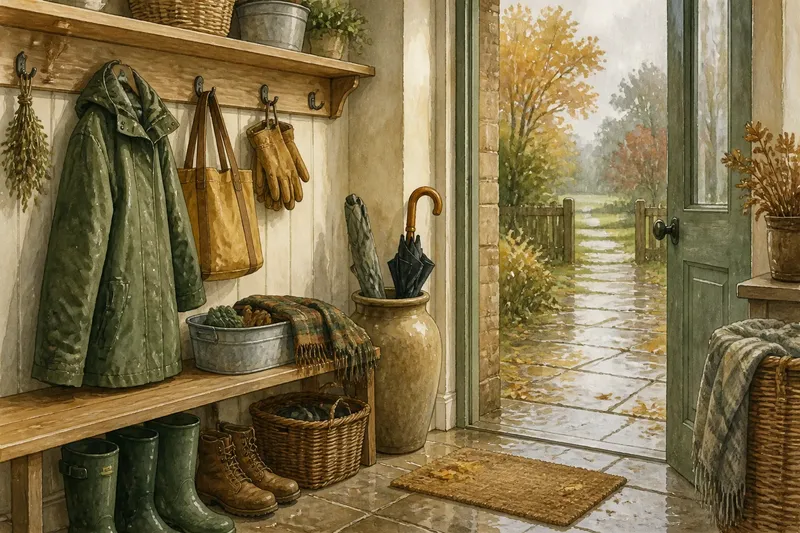
A mudroom reset for the first wet weeks of autumn should start with what the room must do differently as the season changes. Set aside space for the autumn gear in regular use, move warm-weather items elsewhere, and keep the room’s main route clear. The point is a workable transition, not a showroom entry with suspiciously little evidence of people.
Begin by looking at the room as it is used now. Which items have become daily necessities? Which still belong to summer? Which corners are occupied by things that have no connection to the season or the entry? Those answers make the reset more useful than simply adding another row of hooks.
What should change in an autumn mudroom reset?
Autumn often brings a different mix of footwear, outerwear, and outdoor equipment. Keep the items used regularly in the space, but avoid letting every seasonal possession claim a spot near the door. A garden entrance, for example, may need room for sturdy footwear and work gloves; a porch used mainly for visitors may need little more than a place for a few coats.
Sort by use rather than by ownership. A frequently worn light jacket may still belong near the door, while an occasional hiking pack can move to a closet or another storage area. A small transition allowance makes sense for changeable weather; a full summer collection does not need to remain in the entry.
Say your narrow mudroom currently holds sandals, a sun hat, a raincoat, and a pair of gardening gloves. In this invented situation, you identify the raincoat and gloves as the items used on ordinary autumn days, move the sandals and sun hat to a closet, and place the gloves in a small bin beside the raincoat. The expected result is more room for the season’s regular gear without expanding the storage footprint.
How can you sort the room without creating another pile?
Use a temporary holding spot, such as a shallow basket or a clear section of bench, while deciding what stays. Keep the sort contained and make a decision for each item: retain it for current use, store it for another season, or move it to the place where its task belongs.
- If an item is used on ordinary autumn outings, keep it in the room; if it is only occasional, move it to secondary storage.
- If warm-weather footwear is no longer in regular rotation, clean and store it; if a pair still suits changeable days, keep only that pair accessible.
- If a coat is worn often, give it an accessible space; if it has not been needed, store it with other out-of-season clothing.
- If a tool is waiting for repair, move it to the repair area; if it is needed for current outdoor work, keep it with the appropriate equipment.
- If a parcel is waiting to be returned, place it where returns are handled; if it has no clear next action, decide on that action rather than leaving it in the entry.
- If an item blocks the doorway or walking route, relocate it; if the route stays clear, its current position can remain.
These decisions prevent the room from becoming a holding area for unfinished errands. It is rather like clearing a kitchen counter: removing what does not belong there makes the useful space easier to see.
Where should autumn gear go?
Give the season’s regular items consistent places that suit their use. A raincoat can go on a hook with enough room around it; work gloves can sit in a container that is easy to reach; footwear can stay near the door if it does not narrow the route. Keep clean, dry items away from damp corners and avoid crowding clothing so it can air.
Use storage that suits the room and the item. A washable bin is more forgiving for garden gloves than a delicate basket, while a sturdy hook or rack can keep a frequently used coat off a bench. For equipment that is heavy, sharp, or otherwise unsuitable for an entry, choose a safer storage location instead.
Keep the setup simple enough that people can return items without a search. If a container or hook is so far from the natural place of use that it is routinely ignored, move it closer if the room allows. The arrangement should accommodate the household’s actual habits, not an imaginary version in which everyone pauses to admire the storage plan.
What should you check before the reset is done?
Use these questions to resolve common choices. Each answer depends on what the room is used for and how much clear space it has.
How much summer gear should stay in the mudroom?
Keep only the warm-weather items still used during the transition, such as a light layer or footwear that remains in rotation. Store the rest clean and dry elsewhere so the entry has room for autumn needs.
Should a seasonal item stay if it may be useful later?
Keep it near the door only if it is likely to be used soon and has a place that does not crowd daily gear. Otherwise, store it where it can be retrieved when the weather or routine changes.
Where should tools and unfinished errands go?
Move tools to the storage area for that kind of work and parcels to the place where returns are handled. If the next action is unclear, decide what it is before the item settles into a permanent corner.
When should you revise the autumn setup?
Revise it when the household’s regular outdoor gear changes or the current arrangement starts to obstruct the room. The calendar can be a reminder to look, but use and available space should decide what stays.
How can you keep the room useful after the reset?
Choose a brief reset point that already fits the household’s day, such as after outdoor work or before evening routines. Put away gear that no longer needs to remain accessible, return stored items to their places, and remove anything that has wandered into the walking route.
Check the arrangement when the season shifts again. If lighter footwear returns to regular use, make room for it and store the autumn items that have become occasional. A mudroom reset for the first wet weeks of autumn works best when seasonal choices remain easy to reverse, so the room can change with the household rather than collecting every season at once.
One useful last check is to look at the floor and doorway from the direction people usually enter. If the route is clear and the current season’s regular items have an obvious home, the reset is doing its job; if not, remove or relocate the item causing the pinch before adding more storage.